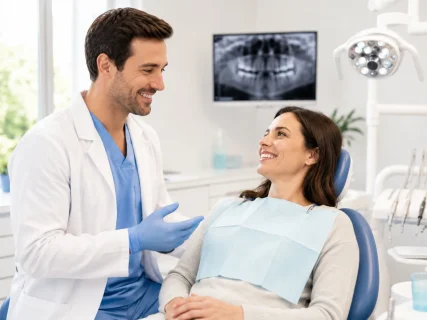
A smile does not have to be perfectly uniform to be healthy or attractive. Still, chips, stubborn discoloration, uneven edges, or small gaps can make some people feel less confident when they speak or smile. Dental veneers offer one possible way to improve several of these cosmetic concerns at the same time.
Patients researching veneers in Modesto, CA often have practical questions: What are veneers made from? Will the procedure hurt? How much natural tooth structure must be removed? And how can someone know whether veneers are the right choice?
This guide explains the basics in clear, everyday language so patients can approach a cosmetic dental consultation with realistic expectations and useful questions.
This article provides general educational information and is not a diagnosis or individualized treatment recommendation. A dentist must examine the teeth, gums, bite, and oral health history before recommending veneers or another cosmetic treatment.
What Are Dental Veneers?
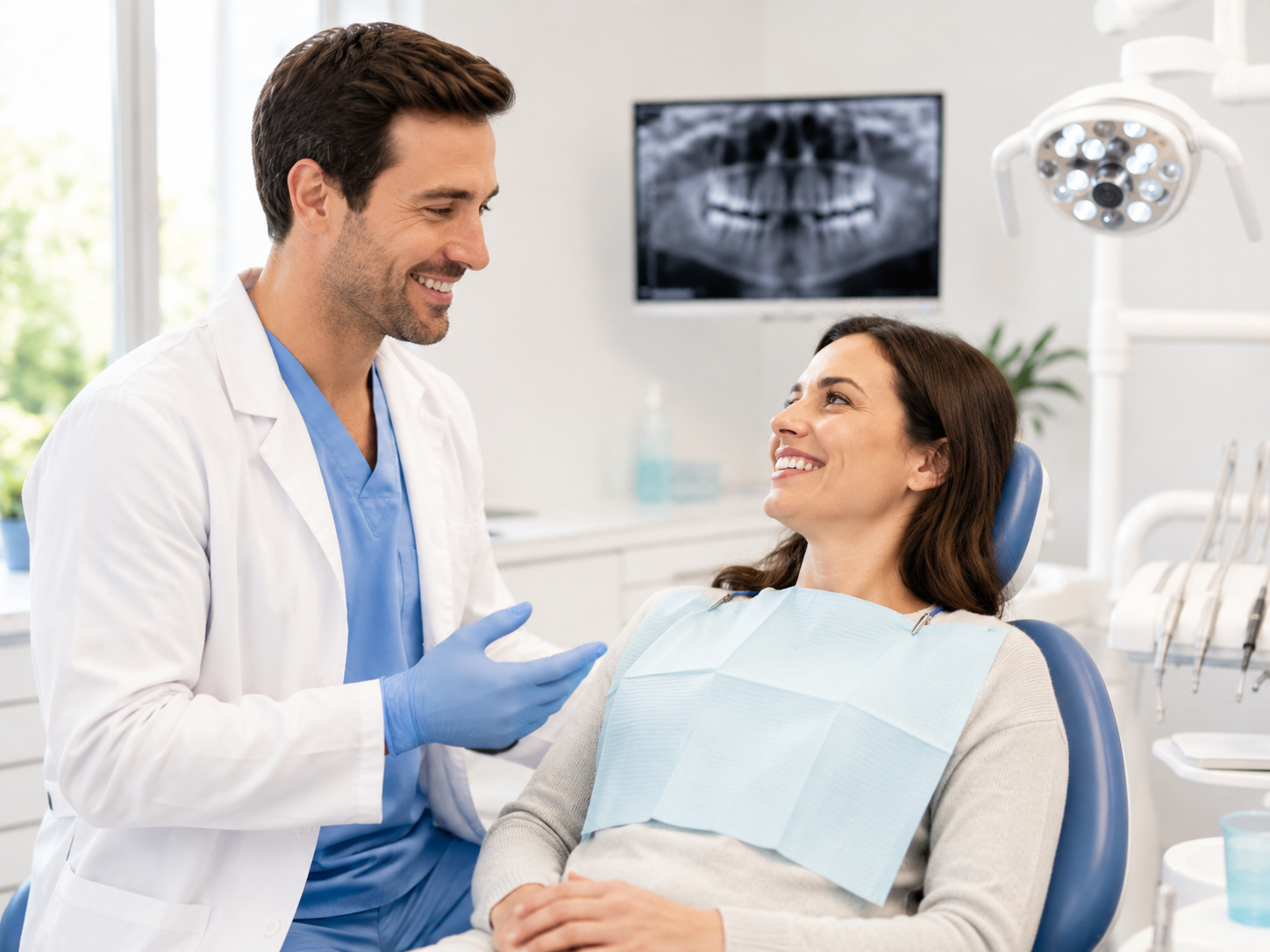
Dental veneers are thin, custom-made coverings placed over the visible front surfaces of teeth. They are designed to change features such as tooth color, shape, length, or proportion while blending with the surrounding smile.
Unlike a dental crown, which generally covers most or all of a tooth, a veneer primarily covers the front surface. The amount of tooth preparation varies according to the material, the existing tooth position, and the desired result.
Veneers are commonly made from one of two materials:
- Porcelain: Porcelain veneers are created for the individual tooth, often with help from a dental laboratory. They can provide natural-looking color, translucency, and surface texture.
- Composite resin: Composite veneers use tooth-colored resin that may be shaped directly on the teeth. This approach may require less preparation in some cases, although the material can stain or wear differently than porcelain.
Neither material is automatically best for every patient. The right option depends on the condition of the teeth, the number of teeth being treated, cosmetic goals, maintenance preferences, and budget.
What Cosmetic Concerns Can Veneers Address?
Veneers may be considered when someone wants to improve one tooth or create a more consistent appearance across several visible teeth. Depending on the clinical situation, they may help with:
- Discoloration that does not respond well to whitening
- Small chips or worn edges
- Teeth that look uneven in length or shape
- Minor gaps between teeth
- Slightly irregular or disproportionate teeth
- Older cosmetic bonding that no longer matches the smile
Veneers are cosmetic restorations, not a substitute for treating active oral disease. Cavities, gum inflammation, infections, or bite problems may need attention first. If a tooth is badly weakened, significantly broken, or heavily restored, a dentist may recommend a different solution.
Who May Be a Good Candidate for Veneers?
A good candidate generally has healthy teeth and gums, realistic cosmetic goals, and enough sound tooth structure to support the restoration. The patient must also be willing to maintain excellent daily oral hygiene and attend regular dental visits.
A dentist may evaluate:
- The health of the teeth and gums
- The thickness and condition of the enamel
- Existing fillings, cracks, or decay
- How the upper and lower teeth meet
- Clenching or grinding habits
- The position and alignment of the teeth
- The patient’s preferred tooth color, shape, and overall look
Veneers may not be the first recommendation when active gum disease or untreated decay is present. Significant teeth grinding can also place veneers under excess pressure. In some situations, orthodontic care, whitening, dental bonding, a crown, or a combination of treatments may better address the underlying concern.
What Happens During the Veneer Process?
1. Consultation and smile planning
Treatment begins with a conversation. The dentist will ask what the patient likes and dislikes about the current smile and what kind of change would feel natural. Photographs, dental scans, X-rays, or impressions may be used to evaluate the teeth and plan proportions.
This stage is also a good time to discuss whether a bright, highly uniform appearance or a softer, more natural variation is preferred. Clear communication helps the dentist design veneers that fit the person rather than creating a one-style-fits-all smile.
2. Tooth preparation
For many veneers, a small amount of enamel must be removed so the restoration can sit naturally rather than making the tooth look bulky. The exact amount varies. Because enamel does not grow back, traditional veneer preparation should generally be viewed as irreversible.
Local anesthetic may be used to keep the patient comfortable. After preparation, the dental team takes an impression or digital scan. Temporary veneers may be placed while the final restorations are being created, depending on the treatment plan.
3. Final placement
Before bonding, the dentist checks each veneer’s shape, shade, fit, and relationship to the neighboring teeth. The teeth are then prepared for bonding, and the veneers are secured with dental cement. The bite is checked and adjusted if necessary.
According to the Cleveland Clinic’s overview of dental veneers, people can generally return to normal activities on the same day after placement. However, the mouth may need a short adjustment period, and individual experiences vary.
Do Veneers Hurt?
Patient comfort is an important part of modern cosmetic dentistry. Local anesthetic can help minimize discomfort when enamel preparation is required. Some people notice temporary tooth or gum sensitivity after treatment, particularly when consuming very hot or cold foods.
Mild awareness of the new tooth shape may also occur at first. The veneers should not continue to feel bulky, sharp, or painful. A patient should contact the dental office if the bite feels uneven, a veneer moves or chips, sensitivity becomes severe, or discomfort does not improve. Small adjustments can sometimes make a meaningful difference.
How Natural Can Veneers Look?
Well-planned veneers are designed to complement the patient’s face, lips, gumline, and surrounding teeth. A natural result involves more than choosing a shade of white. Tooth shape, surface texture, translucency, edge design, and symmetry all influence the final appearance.
Patients should feel comfortable sharing photographs and explaining their preferences. It can also help to mention what they do not want. Someone who prefers subtle changes may choose a different shape or shade than a person seeking a more dramatic smile transformation.
If only one or two teeth will receive veneers, matching the adjacent teeth becomes especially important. Teeth whitening may sometimes be completed before selecting the final veneer shade because porcelain does not respond to whitening in the same way natural enamel does.
How to Care for Veneers
Veneers are not permanent, and they may eventually need repair or replacement. Good habits can help protect both the restorations and the natural teeth beneath them.
- Brush twice daily with a soft-bristled toothbrush and non-abrasive toothpaste.
- Clean between the teeth every day with floss or another dentist-recommended aid.
- Attend regular dental examinations and professional cleanings.
- Avoid chewing ice, pens, fingernails, or other hard objects.
- Do not use veneered teeth to open packaging.
- Ask about a nightguard if clenching or grinding is a concern.
- Wear an appropriate mouthguard during contact sports.
Although the veneer material cannot develop a cavity, the underlying tooth still can. Gum health also matters because inflammation or recession can affect the appearance of the veneer margins.
How Much Do Veneers Cost in Modesto, CA?
There is no single fee that applies to every veneer case. Cost can vary based on the material, number of teeth, complexity of preparation, laboratory work, temporary restorations, and whether other dental care is needed first.
Because veneers are usually considered cosmetic, dental insurance may not cover them. Patients should request a written treatment plan that explains what is included, available payment options, and whether future maintenance or replacement would involve separate costs.
Price matters, but it should not be the only consideration. Careful diagnosis, conservative treatment planning, quality materials, and clear communication all contribute to a satisfactory and maintainable result.
Alternatives to Veneers
Veneers are only one part of cosmetic dentistry. A dentist may discuss alternatives based on the specific concern:
- Professional teeth whitening for many types of surface or age-related discoloration
- Composite bonding for selected chips, gaps, or shape changes
- Orthodontic treatment when tooth position or bite alignment is the main issue
- Dental crowns when a tooth needs more extensive structural coverage
- Contouring for very minor adjustments to uneven enamel edges
Sometimes the most conservative option can achieve the patient’s goal without preparing several teeth. A thorough consultation helps compare the likely benefits, limitations, upkeep, and cost of each approach.
Frequently Asked Questions About Veneers
Can veneers fix crooked teeth?
Veneers may visually improve mild irregularities, but they do not physically move teeth or correct every bite problem. Orthodontic treatment may be more appropriate when crowding, rotation, or bite alignment is significant.
Can veneers stain?
Porcelain generally resists staining better than natural enamel or composite resin, but the surrounding teeth and veneer margins can still change in appearance. Coffee, tea, tobacco, and other staining substances may affect the overall color balance of the smile.
Are teeth shaved down for veneers?
Many veneers require some enamel reduction, although the amount depends on the tooth and treatment design. “No-prep” or minimal-prep options are not suitable for everyone and can look bulky if used in the wrong situation.
Can a veneer fall off or break?
Veneers can loosen, chip, or fracture, particularly when exposed to grinding, hard objects, trauma, or an unfavorable bite. A loose or damaged veneer should be evaluated by a dentist rather than repaired with household adhesive.
Can cavities form under veneers?
Yes. The natural tooth remains vulnerable to decay, especially around the edges of the veneer. Daily brushing, interdental cleaning, and routine examinations remain essential.
How many veneers does a person need?
The number depends on which teeth show when the person smiles, the desired changes, and how the veneers will blend with untreated teeth. Some patients need only one veneer, while others consider several. A dentist can explain the most balanced and conservative plan.
Exploring Veneers in Modesto
A successful cosmetic treatment plan should begin with healthy teeth, thoughtful planning, and an honest discussion about expectations. Patients should understand which changes veneers can accomplish, how much tooth preparation is required, and what long-term maintenance may involve before deciding.
Modesto Dentistry And Implants offers cosmetic dental services for patients who want to explore options for improving their smiles. The practice is located at 3440 McHenry Ave Suite E-14, Modesto, CA 95350.
Patients considering veneers in Modesto, CA can contact the practice to request a consultation. A personalized examination provides the best opportunity to ask questions, compare materials and alternatives, and decide whether veneers fit the patient’s oral health and cosmetic goals.